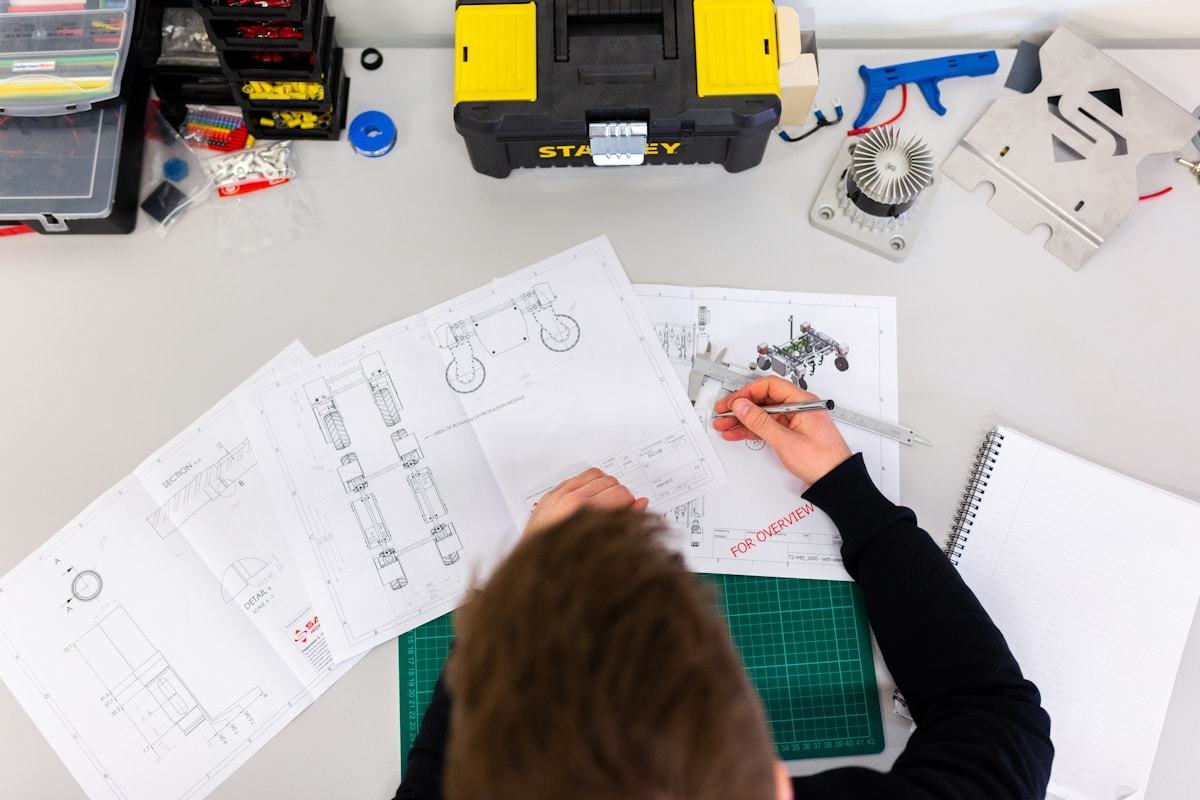
Mechanical design is the process of creating and developing mechanical systems, components, and products. It combines engineering principles with creative problem-solving to produce functional, reliable, and manufacturable designs. From simple brackets to complex machinery, mechanical design encompasses a wide range of activities that transform ideas into tangible products.
Fundamentals of Mechanical Design
Successful mechanical design requires a thorough understanding of several core areas including mechanics, materials science, manufacturing processes, and design methodology. Engineers must consider how loads are transferred through components, how materials will behave under various conditions, and how parts can be efficiently manufactured.
The design process typically begins with understanding the requirements and constraints of a project. Engineers must identify what the product needs to do, what loads it must withstand, what environment it will operate in, and what cost and manufacturing limitations exist.
Material Selection
Choosing the right material is one of the most critical decisions in mechanical design. The selected material must have adequate strength, stiffness, toughness, and durability for the application while also being cost-effective and manufacturable.
Common Engineering Materials
Metals: Steel, aluminum, copper alloys, titanium, and specialty alloys each offer unique property combinations. Steel is the most common structural material due to its excellent strength, stiffness, and cost-effectiveness. Aluminum provides lightweight alternatives with good corrosion resistance. Titanium offers exceptional strength-to-weight ratio for aerospace applications.
Plastics: Engineering plastics like nylon, acetal, polycarbonate, and PEEK provide excellent corrosion resistance, low friction, and design flexibility. They are ideal for applications where weight, noise, or corrosion are concerns.
Composites: Fiber-reinforced polymers combine high strength with low weight. Carbon fiber and fiberglass composites are widely used in aerospace, automotive, and sporting goods where weight reduction is critical.
Fasteners and Connections
Fasteners are essential components in mechanical design, providing removable or permanent joints between parts. Understanding fastener types, grades, and proper selection is crucial for designing reliable assemblies.
Bolt Selection
Bolts are specified by diameter, thread pitch, length, grade, and material. The grade indicates the bolt's strength level - higher grades can withstand greater loads but may be more brittle. Common grades include Grade 2 (low strength), Grade 5 (medium strength), and Grade 8 (high strength) for steel bolts.
Proper bolt tightening is essential for joint reliability. The clamping force must be sufficient to prevent separation of the joined parts while not exceeding the bolt's proof load. Torque control, bolt stretch, and angle-controlled tightening are common methods for achieving proper clamp load.
Gears and Power Transmission
Gears are mechanical components that transmit torque and rotational motion between shafts. They are found in virtually every mechanical system, from wristwatches to heavy machinery.
Gear Types
Spur Gears: The simplest gear type with straight teeth parallel to the axis of rotation. They are efficient and easy to manufacture but can be noisy at high speeds.
Helical Gears: Teeth are cut at an angle to the gear axis, providing smoother and quieter operation than spur gears. They can transmit higher loads due to increased contact ratio.
Bevel Gears: Conically shaped gears used to transmit motion between intersecting shafts, typically at 90-degree angles.
Worm Gears: Consist of a worm (screw) meshing with a worm wheel, providing high reduction ratios and self-locking capability.
Gear Ratio
The gear ratio determines the relationship between input and output speed or torque. It is calculated as the ratio of input teeth to output teeth or input diameter to output diameter. A gear ratio of 3:1 means the input rotates three times for each output rotation, multiplying torque by three.
Bearings
Bearings reduce friction between moving parts and support radial and axial loads. Proper bearing selection is essential for machine reliability and longevity.
Rolling Element Bearings
Ball bearings and roller bearings are the most common bearing types. Ball bearings handle lighter loads at higher speeds, while roller bearings can support heavier loads. Cylindrical roller bearings excel at handling radial loads, while tapered roller bearings can manage combined radial and thrust loads.
Plain Bearings
Plain bearings, also called bushings, use sliding contact rather than rolling elements. They are simpler and less expensive than rolling element bearings but generally have higher friction. They work well in applications with limited space or where contamination is a concern.
Design for Manufacturing
Designing parts with manufacturing in mind can significantly reduce costs and improve quality. Considerations include material selection, geometric features, tolerances, and assembly requirements.
Parts should be designed to minimize the number of operations and setups required. Features should be accessible for cutting tools and allow proper material removal. Tolerances should be as loose as the application allows - tighter tolerances increase manufacturing cost.
Stress Analysis
Understanding stress and strain is fundamental to mechanical design. Engineers must ensure that stresses in components remain below acceptable limits to prevent failure.
Types of Stress
Tension: Pulling forces that stretch a material. Under tension, internal forces act to resist the stretching.
Compression: Pushing forces that squeeze a material. These forces cause internal resistance to the compression.
Shear: Forces acting parallel to the cross-section, causing layers to slide relative to each other.
Bending: Combination of tension and compression stresses that occur when a beam is loaded transversely.
Torsion: Twisting stresses that occur when torque is applied to a shaft.
Safety Factors
Safety factors account for uncertainties in loads, material properties, and analysis methods. The appropriate safety factor depends on the application, consequence of failure, and knowledge of loading conditions. Typical safety factors range from 1.5 to 4.0 for mechanical components.
Conclusion
Mechanical design is a complex discipline that requires knowledge across many domains. Successful designers combine theoretical understanding with practical experience and judgment. By following established principles and best practices, engineers can create designs that are safe, reliable, efficient, and cost-effective.
Related Tools
Gear Ratio Calculator - Calculate gear ratios and output speeds
Bolt Specification Guide - Find bolt sizes and torque values
Bearing Selection Tool - Select appropriate bearings